
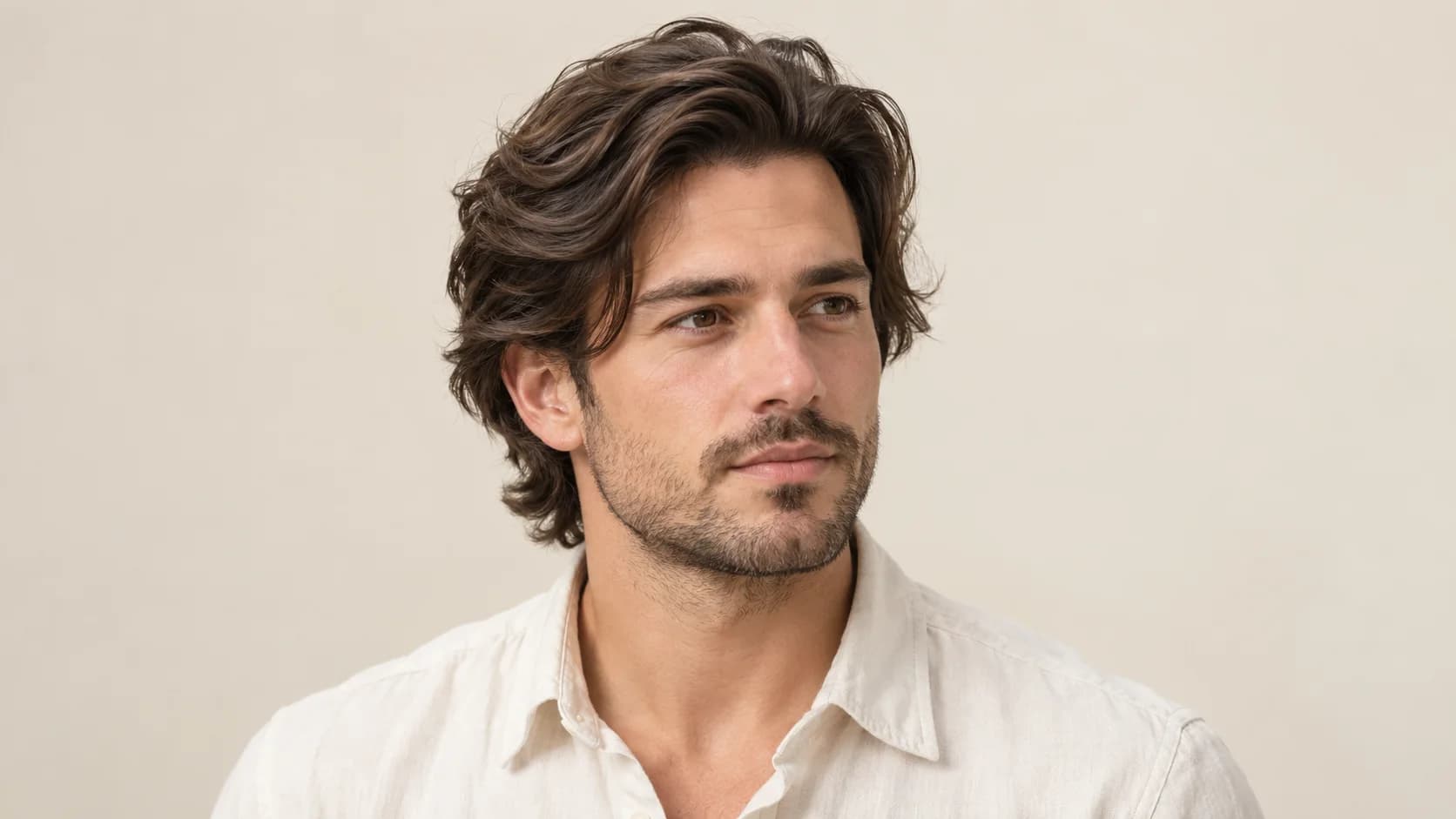
A bro flow haircut leaves enough hair to move around the ears and away from the face. The appeal is that softer, longer outline. If you currently have a close fade, getting there means growing parts of it out. Before choosing a reference, check where your front and sides reach when dry. Then decide whether you want a tucked, swept-back finish or a looser fall around your face.
What makes a bro flow haircut?
Look for movement through the sides and a perimeter that retains some length. JATAI Academy’s bro flow tutorial demonstrates a cutting approach that preserves the outer length while shaping the interior. That is one reference for discussing weight with your barber; your own outline still needs to be agreed on.
Compare the front, ears and nape in the image you like. A front pushed away from the face can be short in one photo and much longer in another. Decide if you need to tuck the side hair behind your ears, whether you want the nape covered and how much forehead you prefer to show. If the image only shows the front, ask to discuss the back separately. You do not need to inherit every detail of someone else’s haircut.
Scroll sideways for the full comparison
| Area | Check in your reference | Check on your own hair |
|---|---|---|
| Front | Swept back, side-swept or falling forward | Can it reach that direction when dry? |
| Sides | Tucked ears or loose coverage | Is there enough length to keep that coverage? |
| Back | Short soft nape or longer ends | Ask the barber to assess it in person |
| Finish | Air-dried bend or carefully lifted roots | Which routine will you repeat at home? |
Length is the first decision
A flow haircut needs length in the areas that create the sweep. If your sides are still close to the scalp, do not ask a preview to fill them with ear-length hair and treat it as a cut you can get today. Keep the desired outline as a grow-out reference. Ask your barber which areas can be tidied without losing the length you are trying to build.
There is no reliable wait time from a front photo. Your starting length, growth rate and desired endpoint all matter. During grow-out, take a photo in the same dry state every few weeks and notice which parts are becoming difficult: the fringe entering your eyes, hair sticking out above the ears or a bulky nape. Describe those specific problems at the next trim. Cutting every section shorter to make them match can prolong the grow-out. Agree on what must stay before the appointment begins.
Work with your natural texture
Choose a reference whose ordinary texture resembles yours. A smooth, swept photograph may require drying; an air-dried wavy version may be fuller around the ears. With fine hair, ask which sections need retained weight and how much product the finish uses. A picture cannot demonstrate that your crown will look denser after layering.
For thick hair, show where the outline feels too wide. The barber can assess that area dry and discuss removing weight without losing the outer length. With curls, check where the ends sit after they spring back. If you would need straightening to copy the reference, decide whether you want that extra work. The aim is a shape that follows your natural bend and growth direction. Ask to see the less styled finish as well as the appointment photograph.
Keep the morning routine specific
After washing, blot the hair with a towel and arrange the front toward the chosen side or away from your face. Keep the sides in the direction you want them to dry. For an air-dried finish, leave the natural bend alone once it is in place. Ask your barber to demonstrate whether your front stays there without extra support; a strongly forward-growing fringe may not.
If the chosen version needs a dryer, direct the front roots toward the intended sweep with your fingers and dry the ear area without blowing it outward. Add a little light styling product only if the ends or front need it. Spread it on your hands first, touch the areas that need control and stop before the hair becomes sticky. Budget for the drying time your hair actually needs. Review the cut when the front blocks your view or the ear and nape outline no longer sits comfortably; a fixed appointment interval cannot account for everyone’s growth and preferred length.
Preview the length you have, then brief your barber
You can choose a photo for local preview in AI Hairstyle Fit before signing in. If your hair already supports the direction, write: “Bro flow with natural ear coverage and a soft swept front. Preserve my existing length, colour and texture. No perm, and only a simple drying routine.” Generation requires login and costs 10 credits. The tool creates one proposed hairstyle from the visible starting point; if a flow is too long for your hair, it should choose a feasible adjustment.
Check the result against the original: face, hairline, crown density and side length. A generated ear-length section on a close fade is a future reference, not a realistic immediate cut. A front photo also cannot confirm the nape or hidden growth pattern. For a useful result, show the original and barber card together. Say: “Keep enough length for this sweep and ear coverage. Please confirm the back shape and only remove weight where it is needed. Show me how it falls with my normal routine.” Download the images within the site’s 24-hour retention period.
For a bro flow haircut, protect the length that makes the sweep possible and choose a finish you can repeat. Take a realistic preview to your barber, with clear notes about what should stay.
Quick answers
How long does hair need to be for a bro flow?
Long enough in the front and sides to reach the sweep and ear coverage you want when dry. The required length depends on texture and the reference. Ask a barber to check it in person; one photograph cannot give an exact target for every head.
Can straight hair have a bro flow haircut?
It can be shaped into a flowing outline if the length and growth direction support it. A wave in someone else’s photo may need styling to reproduce on straight hair. Choose a version that works with the texture and routine you already have.
Can I get bro flow immediately after a skin fade?
The closely cut sections usually need to grow before they can create ear coverage. Keep the reference as a goal and agree on a trim that protects those areas. Do not take newly added length in an AI image as evidence that cutting can produce it now.