
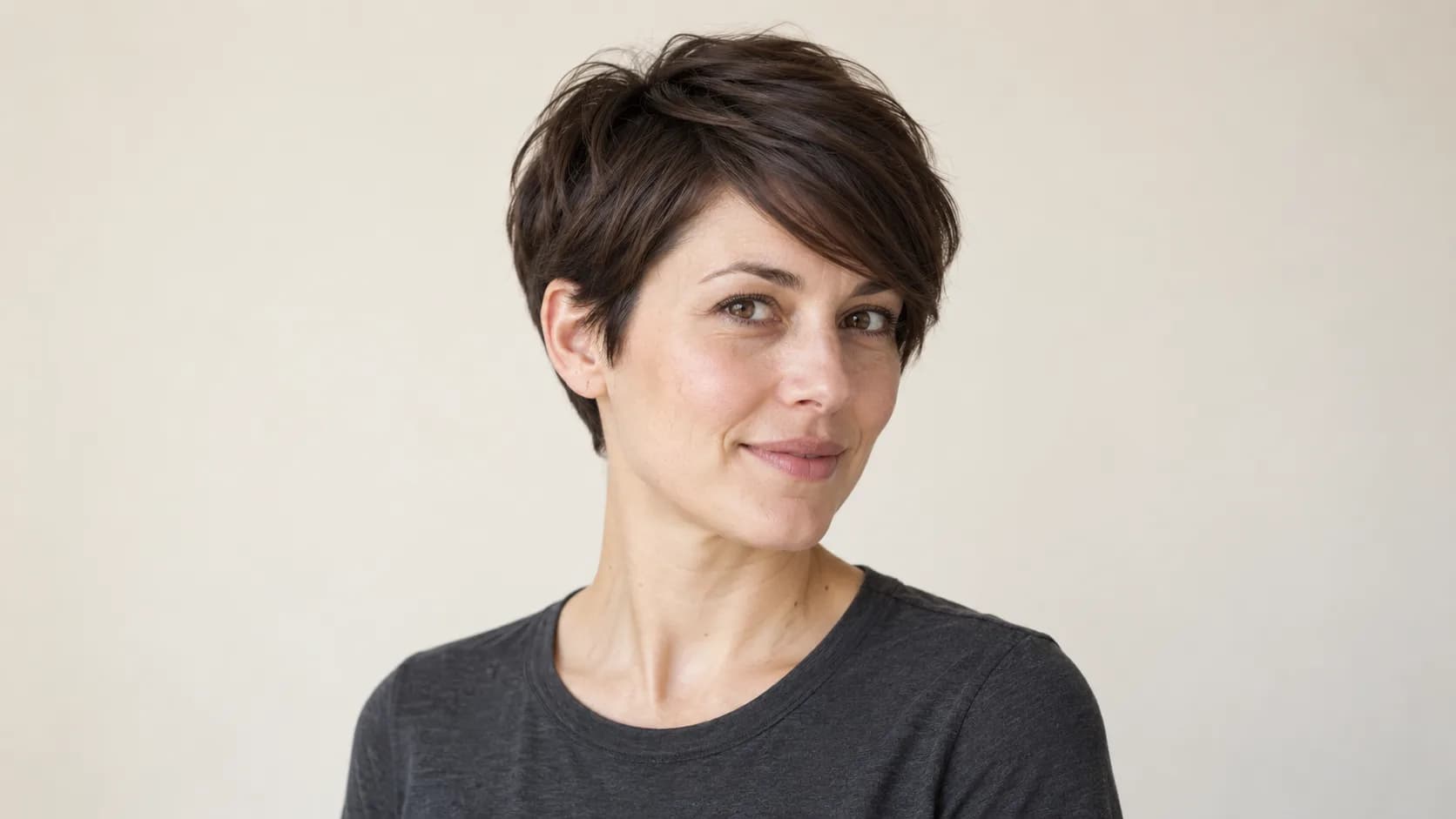
Short hair styles can mean a bob resting at your chin, a pixie that leaves your ears visible, or something between the two. Before saving another reference photo, decide how much length you want around your face and how you usually wear your hair. This guide focuses on women’s short haircut choices; the practical checks also apply to anyone considering these shapes. Start with the hair you have and the amount of work you will actually do in the morning.
Choose your shortest comfortable length first
Look at a current photo with your hair down. Decide whether you want your ears covered, partly visible or fully exposed. Then choose where the front should finish: near the jaw, above it, or as a shorter fringe. Those decisions narrow the options more usefully than a long list of haircut names. If you need to tie your hair back for work, tell your stylist before choosing a short bob. A chin-length cut may leave you using clips instead of a ponytail.
Keep a second photo of your hair in its ordinary, unstyled state. Notice whether the sides turn out, the front separates, or the crown lies flat. A reference with a completely different texture may require styling you do not want. If you already have a pixie, a chin-length bob is a grow-out goal. It cannot be created by cutting the hair you have today.
Bob, pixie, bixie and curly crop: what changes?
A bob keeps a visible line around the jaw or neck. Discuss where that line should land when the hair is dry and whether the ends should look solid or softly broken. A pixie exposes more of the ears and nape; the fringe and top can still retain some length. Ask to see how those longer pieces fall without a salon finish.
A bixie combines elements of a bob and a pixie. In JATAI Academy’s fine-hair tutorial, Russell Mayes keeps weight in selected areas while creating shorter sections and movement elsewhere. The useful appointment question is how much weight your own hair can lose. The name alone does not specify the layers.
A curly crop can follow your existing curl pattern. Ask the stylist to assess the dry outline and spring-up before agreeing on length. A photograph of curls on straight hair does not demonstrate what cutting alone will achieve. The table gives conversation starters, not a ranking of which style is best.
Scroll sideways for the full comparison
| Cut | Agree on before cutting | Everyday consideration |
|---|---|---|
| Short bob | Dry endpoint, ear coverage and weight at the ends | Check whether the ends need directing with a dryer |
| Soft pixie | Fringe length, ear exposure and nape outline | Short sections may need dampening after sleep |
| Bixie | Which areas stay fuller and which become shorter | Parting and front sections may need a quick reset |
| Curly crop | Dry curl shape and how much length springs up | Allow for drying and use your usual curl routine |
For fine or thick hair, discuss weight before layers
For fine hair, point out any ends that already look sparse and ask which areas should keep their weight. “Add texture” can describe several different cutting choices. Ask the stylist to explain where length or bulk will be removed before approving heavy thinning. Short haircuts for fine hair should still work with the density you have; a preview that fills in a visible part is not a reliable cutting reference.
With thick hair, discuss where the bulk bothers you: behind the ears, at the nape, or through the sides. You may want a narrower outline without a very short perimeter. Avoid requesting that everything be thinned equally. Your stylist needs to assess growth direction and how the hair behaves dry, including areas a front photo cannot show.
Low-maintenance short hair still needs a plan
Describe a normal morning rather than asking for “easy hair.” If you air-dry and leave home, say so. If you can spend a few minutes with a dryer, ask for a demonstration of that exact routine. A short cut that relies on straightening naturally wavy hair every day does not meet a no-heat preference.
For a soft side-swept shape, a possible routine is to dampen the flattened front, comb it toward the chosen side and direct the roots briefly with a dryer. Keep the sides close to their natural fall. If the ends need definition, spread a small amount of light styling product between your hands and touch the ends first. Ask your stylist to adapt this to the chosen cut; curly hair may need a different drying approach.
Maintenance also means appointments. Ask what change should trigger the next trim: a fringe entering your eyes, bulk gathering around the ears, or a nape outline you no longer like. A fixed number of weeks is only a starting estimate because growth and your preferred finish vary.
Use a photo preview to check the details that matter
AI Hairstyle Fit lets you select a photo for local preview and enter preferences before signing in. Starting generation requires an account. You can describe a shorter direction and your limits, such as keeping ear coverage and avoiding a perm. The tool is designed to suggest one feasible haircut from the visible hair, rather than present an unrestricted gallery of transformations.
Compare the result with your original. Check the face, skin and expression first, then the amount of hair and available length. A fuller crown or newly dense hairline may look appealing but cannot be assumed to come from a cut. The preview and automatic review can make mistakes. Discuss the dry shape with your stylist and download any result you want to keep before the site’s 24-hour photo retention period ends.
What to say at the appointment
A useful starting example is: “I want a short bob with the front around my jaw when dry. Keep enough side coverage to tuck behind my ears. I like a fairly solid edge, and I do not want lots of short layers. I usually air-dry, so please check whether this outline works with my natural bend before taking off the length.” Replace the endpoint and routine with your own choices.
Bring a photo of the shape and mention what you dislike about it, too. Ask the stylist to explain the back outline in person, check the parting and show you the unstyled finish. If the haircut would require a different routine from the one you agreed on, settle that before the first cut.
Choose the length you are comfortable losing, then agree on a dry outline and a routine you can repeat. Take those decisions, along with a reference image, to the appointment.
Quick answers
Which short hair style needs the least styling?
Start with an outline that follows your natural texture and growth direction. Ask to see it air-dried or with the short routine you can manage. A pixie is not automatically easier than a bob if its fringe needs resetting every morning.
Can fine hair work with a pixie or bixie?
It can, but the amount of retained weight matters. Ask your stylist to check your density and avoid removing more weight than the shape needs. Cutting cannot add hair to sparse areas.
How can I tell whether short hair will suit me?
Compare the ear coverage, fringe position and outline against a current photo, then discuss them with a stylist. A single ruler measurement or face-shape label cannot decide your hairstyle or maintenance preferences.