
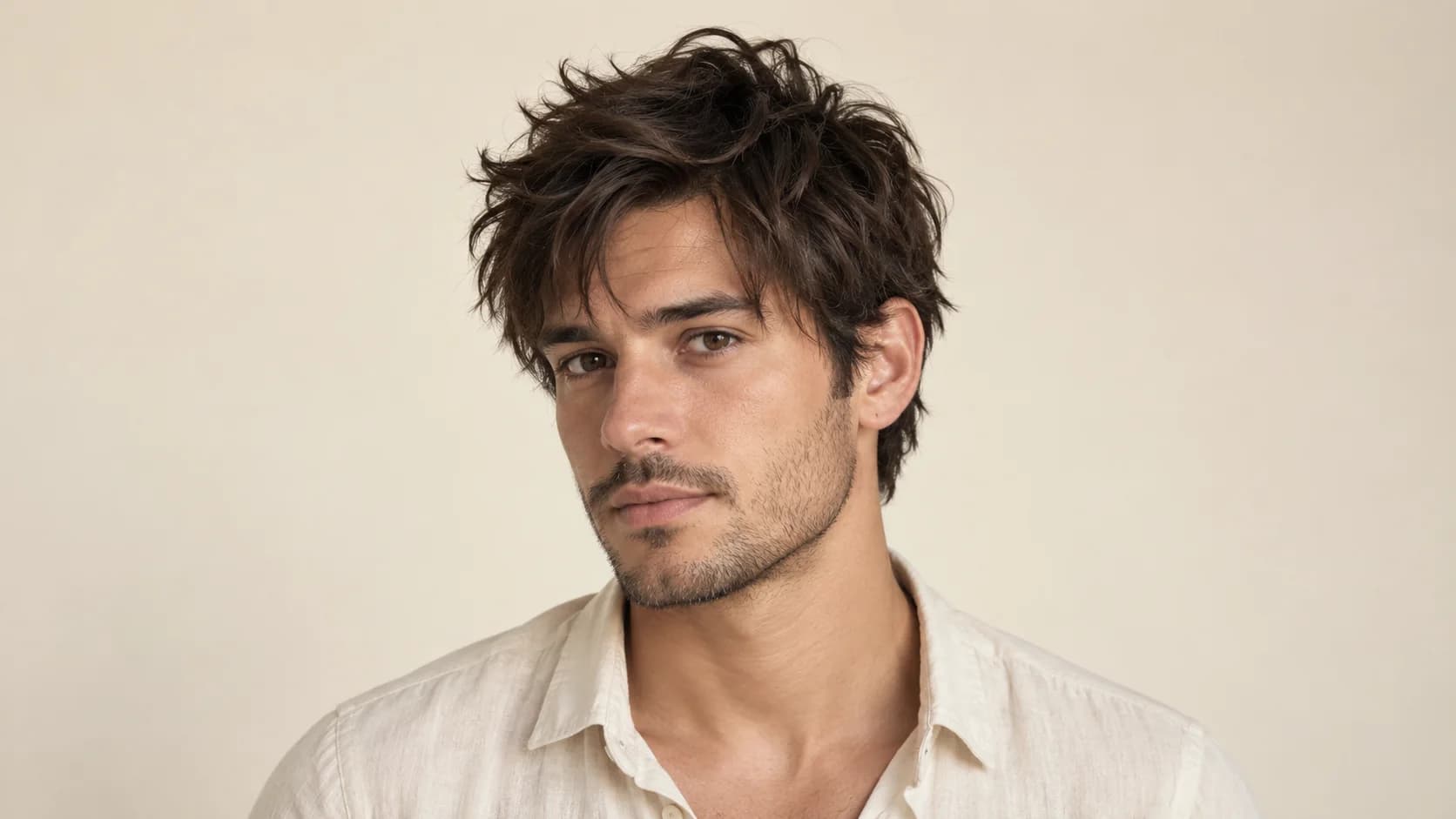
The warrior cut appeals to people who want some movement without a sharply drawn outline. But two reference photos under the same name can have very different fronts and sides. Before booking a cut, choose the detail you like: the broken fringe, the loose top or the softer edges. This guide helps you describe those choices, check what your present hair can support and use a photo preview without mistaking it for a haircut guarantee.
What is a warrior cut?
The name commonly describes a textured top with irregular pieces and soft edges. GQ’s conversations with barbers describe movement and a deliberately loose finish. It is a broad reference, so bring a picture rather than expecting the name to specify every area.
For your appointment, pick one front detail and one side detail. Do you want the fringe to break apart and reveal some forehead, or fall further forward? Should the ears remain partly covered? A barber can demonstrate those decisions with your existing hair before removing length. Keep a second reference for anything you want to avoid, such as very close sides or a long tail at the back. That makes the brief easier to interpret.
Warrior cut vs textured crop, mullet and bro flow
Compare the direction of the fringe and the outline around the ears. A textured crop reference often has a clearer forward fringe; a warrior reference may have a less uniform front. You can ask for a quieter version of that broken outline without committing to a large amount of height.
If the back is the part you like in a mullet photo, show it separately. A front-facing warrior photo does not establish a long back section. For bro flow, look at whether the hair already reaches around the ears and can move away from the face. Choosing a shorter textured top will remove length that a flowing shape needs. Use the table to decide which detail belongs in your request, rather than combining several names and hoping they agree.
Scroll sideways for the full comparison
| Reference | Detail to compare | Question for the barber |
|---|---|---|
| Warrior cut | Broken front and loose top | How much texture can my hair retain without becoming sparse? |
| Textured crop | Forward fringe and shorter outline | Where will the fringe sit when dry? |
| Mullet | Visible length at the back | Do I want that back length, or just the front texture? |
| Bro flow | Longer sides and swept movement | Which areas need to grow before this shape is possible? |
Check length and weight before asking for texture
Try moving the front into the direction you want while your hair is dry. If it cannot reach that position now, a cut will not supply the missing length. Keep the reference as a grow-out goal and ask for a smaller change at the next appointment. A photograph cannot measure your hair in centimetres or establish the growth direction at the crown.
With fine hair, point out any areas that already separate and show scalp. Ask the barber which sections need to keep their weight. “Messier” does not mean everything should be thinned. For thick hair, identify where the outline feels too broad instead of asking to remove bulk everywhere. If you have curls, bring a reference with a similar natural pattern. Straightening or perming to match a different texture would change the maintenance plan; decide whether you accept that before approving the cut.
A barber brief and a routine you can repeat
A starting brief is: “I want the loose, broken texture in this picture. Keep enough top length to move the front slightly forward and to the side, with some forehead visible. Keep the sides soft and connected to the top. Please check the back outline with me, and avoid heavy thinning or a skin fade unless we agree on it.” Adjust the front direction to your reference. Ask the barber to show the planned length; this example is a design request, not a measurement from a photo.
Ask to see the finish with the routine you will actually use. For a softly lifted version, dampen the front after sleep, move the roots toward your preferred direction with your fingers and dry them briefly if needed. Let the sides follow their natural fall. Spread a small amount of light matte product between your hands, then touch the ends on top before adding more. Flattening everything with a wet, heavy product can remove the separation you wanted. If you will air-dry only, have the barber demonstrate that finish before choosing the more lifted reference.
Preview a warrior cut on your own photo
In AI Hairstyle Fit, you can select a clear front photo for local preview and write your preferences before signing in. To request this direction, try: “Warrior cut with a softly broken fringe, modest top texture and natural sides. Keep my colour and density; no perm or skin fade. I can spend a few minutes styling.” Generation requires login and costs 10 credits. The tool proposes one feasible direction from visible hair; it may need to adapt your request.
Compare the result with the original before choosing it as a reference. Check that your face and skin still look the same, then inspect the fringe, hairline and density. Discard a result that supplies extra hair to sparse areas or shows length you do not have. A front preview cannot confirm the back or crown growth pattern. When a result is useful, take its barber card and the original to the appointment. Download it within the site’s 24-hour photo retention period. Revisit the shape when the front needs constant repositioning or the sides grow wider than you prefer.
Choose the warrior cut details you want to keep, agree on how much weight stays, and check the ordinary morning routine. A useful preview gives you specific points to discuss with your barber.
Quick answers
How do I ask for a warrior haircut?
Bring a reference and specify the fringe direction, top texture, ear coverage and back outline. Ask the barber to confirm your available length and weight before cutting. The name alone leaves those choices open.
Can I get a warrior cut with short hair?
A shorter interpretation may be possible, but a lifted or separated front needs enough existing length to move. If your hair cannot reach the pictured direction, choose a shorter version or grow it first. A preview cannot make that length available.
Does a warrior cut need a perm or daily styling?
A perm is not a default requirement. Start with your natural texture and ask for a routine you can manage. Some pictured finishes require drying and a little product; an air-dried version may sit flatter. Confirm both versions with your barber.